Shockwave Therapy
kr 344,00
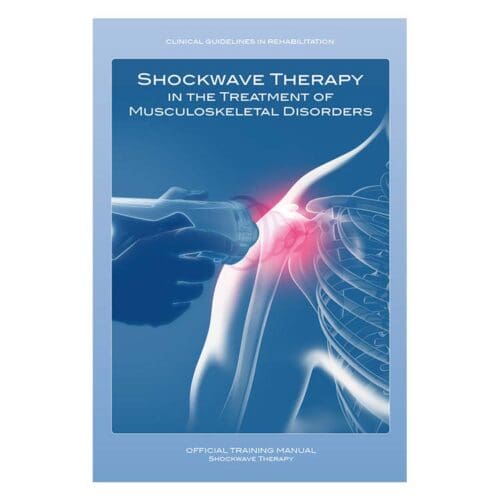
Shockwave Therapy in the Treatment of Musculoskeletal Disorders: – a book on radial and focused shockwave therapy!
This book provides a basic Description shockwave therapy, as well as information on the differences between focused and radial shockwave therapy. It combines theoretical concepts with references to the relevant literature, along with practical insights. Here you will find specific tips and descriptions on how to apply focused or radial shockwaves.

Description
Shockwave Therapy in the Treatment of Musculoskeletal Disorders: – a book on radial and focused shockwave therapy!
The book was written by Jan Vinding, Product shockwave specialist at DJO Nordic, in collaboration with Cliff Eaton, a clinical specialist at DJO Global.
The book begins with a brief historical overview. Shock wave therapy has long been used in various medical fields, but as a therapeutic tool, it is relatively new. This book provides a basic Description shock wave therapy, as well as information on the differences between focused and radial shock wave therapy.
The book combines theoretical concepts with references to the relevant literature and practical experience. It also provides specific tips and descriptions on how to use focused or radial Shockwave.
The book is divided into two parts; the first part covers theoretical, technological, and physiological principles. The second part of the book provides guidelines on parameters and illustrations for various musculoskeletal conditions.
Images and information regarding, for example, frequency settings are available for a variety of indications:
- Plantar fasciitis,
- Mid-Achilles,
- Tibial Stress Syndrome,
- PES Anserinus Tendinitis,
- Patellar tendinopathy,
- Greater Trochanter Pain,
- Hamstring tendinopathy,
- Supraspinatus tendinopathy,
- Infraspinatus tendinopathy,
- Elbow Epicondylitis,
- Carpal Tunnel Syndrome,
- Cervical Points,
- Lumbago: Facet Joints,
- Spasticity of the Calf Muscles
The protocols described in the book are guidelines based on research evidence and the authors’ clinical experience.
The book is written in English.