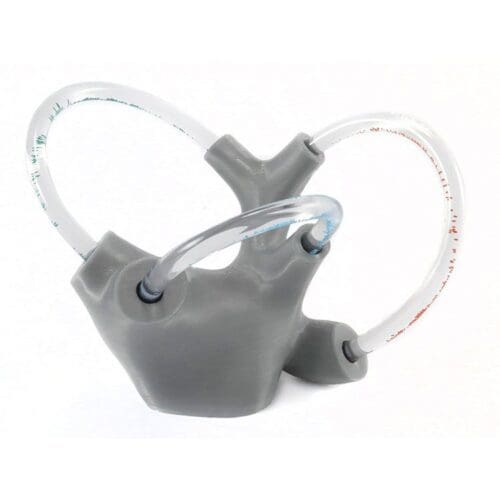
The Fluid-Filled Apparatus – Large – Left Ear is a detailed vestibular model Designed for Education to demonstrate the function of the inner ear and the anatomy of the vestibular system. The model shows the three semicircular canals in the left ear and provides a visual and practical illustration of how otoconia move within the vestibular system.
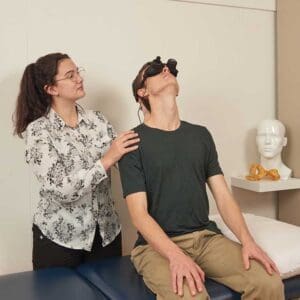
This anatomical model is particularly useful for explaining benign paroxysmal positional vertigo (BPPV), a condition in which small crystals in the inner ear affect balance and can cause dizziness. In the model, the otoconia are represented by colored gemstones that move with gravity in the same way as real crystals in the vestibular system.
Realistic demonstration of BPPV
The fluid-filled canals make it possible to demonstrate how the otoconia move through the various semicircular canals. The crystals can also become lodged on the cupula, illustrating the mechanisms involved in BPPV and other vestibular disorders.
This makes the model very useful for explaining:
- How the vestibular system works
- How otoconia affect balance
- The mechanisms underlying benign paroxysmal positional vertigo (BPPV)
- Movement in the semicircular canals
- The relationship between head movement and dizziness
Ideal for Education clinical use
The Fluid-Filled Apparatus – Large – Left Ear is well suited for:
- Education Anatomy and Physiology
- Physiotherapy Vestibular Rehabilitation
- Clinics and treatment rooms
- Medical Education
- Demonstration for patients with dizziness and BPPV
The visual and dynamic design makes complex vestibular processes easier to understand for students, patients, and healthcare professionals alike.
Product benefits
- Vestibular model of the left ear
- Shows all three archways
- Fluid-filled model for realistic demonstration
- Colored gemstones represent otokonia
- Illustrates the mechanisms behind BPPV
- Suitable for Education patient information
- Useful for Physiotherapy vestibular rehabilitation
The Fluid-Filled Apparatus – Large – Left Ear is an educational and effective tool for demonstrating the anatomy and function of the vestibular system, as well as for understanding benign paroxysmal positional vertigo and other vestibular disorders.
See all our anatomical models here.